sharpening guide angle
Sharpening guide angles are crucial for achieving a keen‚ functional edge on various tools. Maintaining
consistent angles‚ like those offered by tools such as the Knifewear Angle Guide‚
ensures optimal performance and longevity. Utilizing a CMT Digital Angle Finder
or a Naniwa QX-0010 clip-on guide simplifies this process‚ providing precision
and repeatability for both novice and experienced users.
The Importance of Consistent Angles
Consistent sharpening angles are paramount for achieving a reliable and effective cutting edge. Variations in angle lead to uneven wear‚ reduced sharpness‚ and ultimately‚ a compromised tool. Imagine sharpening a knife‚ alternating between 18 and 22 degrees – the resulting edge will be weak and prone to chipping.
Tools like the Sharp Pebble Angle Guide and Wedgek AGM are designed to eliminate this inconsistency. They provide a fixed reference point‚ ensuring each pass of the blade against the sharpening stone is at the desired angle. This is especially vital for precision instruments where even slight deviations can impact performance.
Maintaining a consistent angle isn’t merely about sharpness; it’s about the tool’s intended purpose. A 15-20 degree angle‚ ideal for general kitchen knives as highlighted by Knifewear‚ differs significantly from the steeper angle required for heavy-duty applications. Accurate and repeatable angles translate to predictable and efficient cutting‚ extending the life of your tools and enhancing their usability.
Why Use a Sharpening Guide?
Employing a sharpening guide dramatically simplifies the often-challenging task of maintaining precise blade angles. For beginners‚ it removes the guesswork‚ fostering confidence and accelerating the learning curve. Even seasoned sharpeners benefit from the consistency a guide provides‚ especially during lengthy sharpening sessions where fatigue can compromise accuracy.
Guides like the Naniwa QX-0010‚ which clips onto the blade spine‚ ensure a constant optimum angle against the whetstone. The Sharp Pebble Angle Guide offers versatility‚ accommodating various knife sizes and sharpening angles between 15-20 degrees. Utilizing a CMT Digital Angle Finder allows for precise setup of power tools.
Ultimately‚ a sharpening guide isn’t about replacing skill; it’s about augmenting it. It minimizes errors‚ maximizes efficiency‚ and delivers repeatable results‚ ensuring your tools consistently perform at their best. It’s an investment in both your tools and your time.
Types of Sharpening Guides
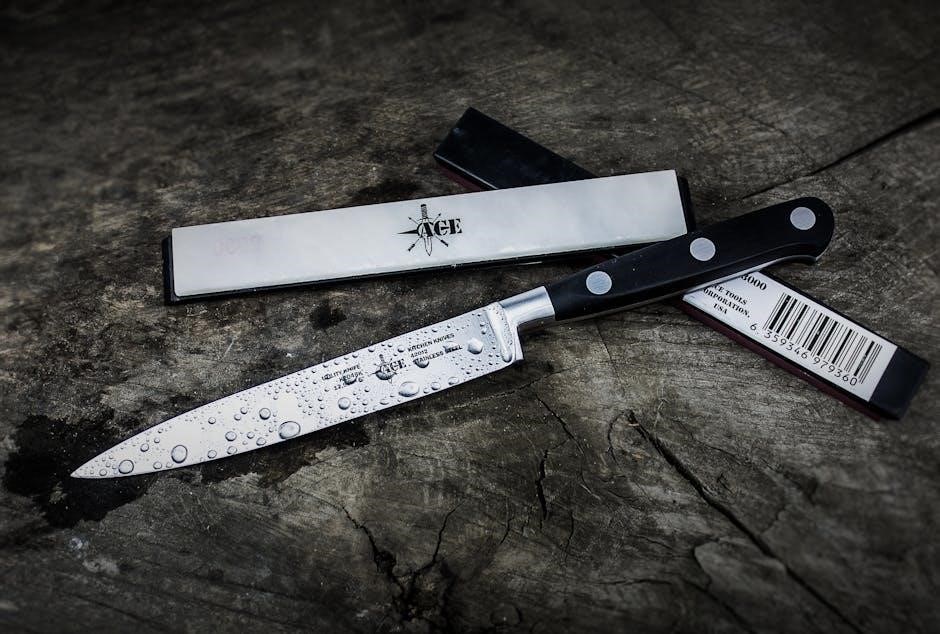
Sharpening guides vary widely‚ including magnetic angle finders like CMT‚ clip-on spine guides such as Naniwa QX-0010‚ universal guides like Sharp Pebble‚ and wedge-style guides like Wedgek AGM.
Magnetic Angle Finders (e.g.‚ CMT Digital Angle Finder)
Magnetic angle finders‚ exemplified by the CMT Digital Angle Finder‚ represent a sophisticated approach to maintaining precise sharpening angles. These tools utilize a strong magnetic base‚ allowing for secure attachment directly to the blade being sharpened‚ or to the sharpening platform itself. This feature is particularly beneficial when working with power tools‚ ensuring accurate setup and consistent results.
The key advantage of digital angle finders lies in their easy-to-read LED display‚ which provides a clear and unambiguous indication of the current angle. This eliminates guesswork and allows for minute adjustments‚ crucial for achieving the desired edge geometry. Katz-Moses Tools highlights the long-term utility and reliability of the CMT model‚ positioning it as a favorite accessory for tool setup. They are incredibly versatile‚ suitable for a wide range of sharpening tasks beyond just knives‚ making them a valuable addition to any workshop.
Clip-On Spine Guides (e.g.‚ Naniwa QX-0010)
Clip-on spine guides‚ such as the Naniwa QX-0010‚ offer a simple yet effective method for controlling sharpening angles. These guides physically attach to the spine of the blade‚ resting against the sharpening stone’s surface. This direct contact ensures a consistent angle is maintained throughout the sharpening process‚ minimizing the risk of uneven edges or accidental angle deviations.
The primary benefit of these guides is their universal compatibility; they can be used with virtually any knife‚ regardless of shape or size. Amazon listings emphasize their ease of use and ability to maintain an optimum angle consistently. This makes them an excellent choice for beginners or those seeking a straightforward sharpening solution. They are particularly useful for maintaining a specific angle‚ crucial for achieving the desired sharpness and edge retention for different blade types.
Universal Angle Guides (e.g.‚ Sharp Pebble Angle Guide)
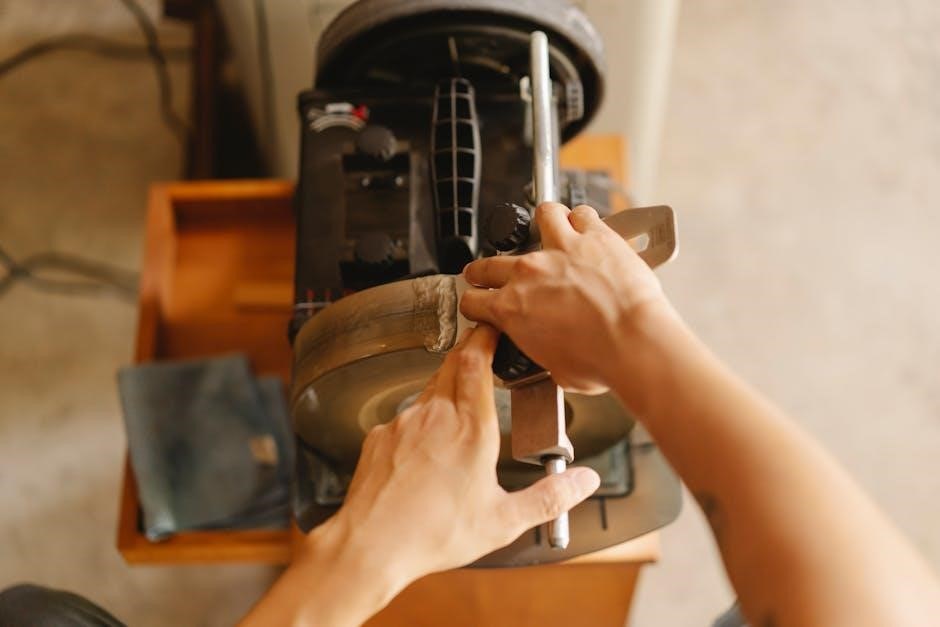
Universal angle guides‚ like the Sharp Pebble Angle Guide‚ are designed for versatility‚ accommodating a wide range of knife sizes and types. These guides don’t attach to the blade itself‚ but rather provide a reference point for maintaining the correct angle against the sharpening stone. They typically offer a range of angles‚ often between 15 and 20 degrees‚ catering to various kitchen and outdoor knives.
The “one size fits all” approach‚ highlighted in product descriptions‚ makes them convenient for users with diverse sharpening needs. They are particularly helpful for those learning to sharpen freehand‚ providing a visual and tactile cue for achieving consistent results. The Sharp Pebble guide allows quick and easy angle checks‚ ensuring you’re “nailing it” every time‚ contributing to a sharper‚ more durable edge.
Wedge-Style Angle Guides (e.g.‚ Wedgek AGM)
Wedge-style angle guides‚ such as the Wedgek AGM‚ offer a different approach to maintaining consistent sharpening angles. These guides typically sit on the sharpening stone and the blade rests against the wedge‚ dictating the angle of the edge to the stone. Often sold in packs‚ like the 2-pack available on Amazon‚ they allow for adjustments within a specific range‚ commonly from 10 to 20 degrees.
These guides are marketed as professional-grade tools‚ providing a stable and repeatable setup for sharpening. They are designed to work with whetstones‚ ensuring a precise angle is maintained throughout the sharpening process. The Wedgek AGM aims to eliminate guesswork‚ offering a reliable solution for achieving a consistently sharp edge on knives and other bladed tools‚ even for random knife sharpeners.
Understanding Sharpening Angles for Different Tools
Sharpening guide angles vary significantly depending on the tool; knives typically use 15-20 degrees‚ while gardening tools and drill bits require
different‚ specialized angles for optimal performance.
Knife Sharpening Angles
Knife sharpening angles are paramount for achieving a functional and lasting edge. A sharpening guide angle of 15-20 degrees is generally recommended for most general kitchen knives‚ providing a balance between sharpness and durability. This range‚ easily maintained with tools like the Sharp Pebble Angle Guide‚ allows for clean slicing and food preparation.
However‚ heavier-duty knives‚ such as those used for cleaving bone or tackling tougher tasks‚ often benefit from higher angles – typically between 20-25 degrees. Increasing the angle strengthens the edge‚ making it more resistant to chipping and rolling. Utilizing a precise tool like the Wedgek AGM ensures consistent angle maintenance during sharpening‚ regardless of the blade’s intended purpose. Remember‚ selecting the correct sharpening guide angle is crucial for maximizing a knife’s performance and lifespan.
15-20 Degree Angle for General Kitchen Knives
Employing a sharpening guide angle between 15 and 20 degrees is ideal for most general kitchen knives‚ striking a perfect balance between sharpness and edge retention. This range facilitates effortless slicing through fruits‚ vegetables‚ and meats. Tools like the Knifewear Angle Guide are invaluable for consistently achieving and maintaining this optimal angle‚ ensuring precision with each stroke.
Using a guide‚ such as the Naniwa QX-0010‚ prevents accidental alterations to the blade’s geometry. A sharpening guide angle within this spectrum allows for a relatively thin edge‚ maximizing cutting efficiency. Remember‚ consistent angle control is key; a CMT Digital Angle Finder can assist in initial setup. Maintaining this angle throughout the sharpening process results in a knife that’s both keenly sharp and durable for everyday kitchen tasks.
Higher Angles for Heavy-Duty Knives
For heavy-duty knives designed for tougher tasks‚ a sharpening guide angle exceeding 20 degrees is recommended. This increased angle creates a more robust‚ less acute edge‚ enhancing durability and resistance to chipping or rolling. Knives used for chopping through bone‚ thick-skinned produce‚ or performing demanding butchery work benefit significantly from this approach.
While sacrificing some initial sharpness‚ a greater sharpening guide angle provides a longer-lasting edge. Utilizing a tool like the Wedgek AGM can help maintain this consistent‚ higher angle. Consistent angle control‚ aided by a CMT Digital Angle Finder during setup‚ is vital. Remember‚ a more obtuse angle prioritizes strength over finesse‚ making it ideal for knives subjected to significant force. This ensures reliable performance even under strenuous conditions.
Gardening Tool Sharpening Angles
Determining the correct sharpening guide angle for gardening tools depends on their specific function. Pruning shears and loppers typically require a 30-45 degree angle‚ providing sufficient strength for cutting through branches without dulling quickly. A Sharp Pebble Angle Guide can be invaluable for maintaining this range consistently.
For edging tools like lawn edgers or spades‚ a slightly lower angle of 25-35 degrees is often preferred‚ balancing sharpness with durability. Sharpening is best done during the winter months‚ allowing for indoor maintenance. Consistent angle application‚ even without a dedicated guide‚ is key. Remember to disassemble tools for thorough cleaning and sharpening. Utilizing a Knifewear Angle Guide can assist in visualizing and achieving the desired angle‚ ensuring efficient and effective gardening tool performance.
Drill Bit Sharpening Angles
Establishing the correct sharpening guide angle for drill bits is critical for precise drilling and preventing premature wear. Point angles typically range from 118 to 135 degrees‚ with 118 degrees suited for softer materials like wood and plastic‚ and 135 degrees for harder metals. Maintaining this angle consistently is paramount for optimal performance.
While specialized drill bit sharpening guides exist‚ achieving the correct angle can be challenging. A CMT Digital Angle Finder‚ though not specifically designed for drill bits‚ can assist in verifying the point angle during the sharpening process. Dull drill bits lead to inefficient drilling and potential damage to materials. Consistent sharpening‚ even with a basic understanding of angle requirements‚ extends bit life and improves drilling accuracy.
Using Sharpening Guides: A Step-by-Step Approach
Sharpening guide angles are easily maintained by attaching the guide securely to the blade‚ ensuring consistent pressure‚ and frequently checking the angle during sharpening.

Attaching the Guide to the Blade
Successfully attaching a sharpening guide‚ like the Naniwa QX-0010 which clips on to the spine of any knife‚ is the foundational step for consistent sharpening. Ensure the guide is firmly secured; a loose fit compromises angle accuracy. For wedge-style guides‚ such as the Wedgek AGM‚ carefully position it to establish the desired sharpening angle – typically between 10 and 20 degrees‚ depending on the blade type.
Proper alignment is paramount. The guide must rest flat against the blade’s surface and the whetstone‚ creating a stable platform. Double-check that the guide doesn’t wobble or shift during initial pressure application. A secure attachment prevents unwanted angle variations during the sharpening stroke‚ leading to a more refined and even edge. Remember‚ a stable guide is the key to unlocking the benefits of guided sharpening.
Maintaining Consistent Pressure
Consistent pressure is vital when utilizing a sharpening guide to maintain the desired angle. Whether employing a Sharp Pebble Angle Guide or a magnetic finder like the CMT Digital Angle Finder‚ even pressure across the blade ensures uniform material removal. Avoid excessive force‚ as it can disrupt the guide’s position and compromise the angle.
Focus on a smooth‚ controlled stroke‚ letting the guide dictate the angle rather than relying on feel. A gentle‚ steady pressure is more effective than bursts of force. Regularly check the guide’s alignment during sharpening to confirm it remains securely in place. Maintaining this consistency throughout the process is crucial for achieving a sharp‚ even edge and maximizing the benefits of guided sharpening.
Checking the Angle During Sharpening
Regularly verifying the sharpening angle is paramount‚ even when using a guide like the Naniwa QX-0010 or Wedgek AGM. Briefly pause during each stroke to visually inspect the guide’s alignment against the sharpening stone. Ensure the guide remains firmly seated and hasn’t shifted‚ which could alter the intended angle.
For precise confirmation‚ a Knifewear Angle Guide can be used independently to double-check the angle established by the primary guide. Slight adjustments may be necessary to compensate for stone irregularities or variations in blade geometry. Consistent monitoring prevents unintentional angle deviations‚ guaranteeing a sharp‚ predictable edge. This proactive approach maximizes the effectiveness of your sharpening efforts and ensures optimal tool performance.

Advanced Techniques & Considerations
Sharpening guide angles require adaptation based on grit and freehand skill. Experienced users may transition from guided to freehand sharpening for
refinement and control.
Adjusting for Different Stone Grits
Sharpening guide angles must be dynamically adjusted when transitioning between different stone grits. Coarser grits‚ used for initial reshaping and removing significant material‚ often benefit from slightly steeper angles. This allows for more aggressive material removal and faster progress towards establishing a new edge.
As you progress to finer grits‚ intended for refining the edge and achieving sharpness‚ a shallower angle is generally recommended. This creates a more delicate and refined edge‚ maximizing cutting performance. Maintaining consistent angles with tools like the Sharp Pebble Angle Guide becomes even more critical at finer grits‚ as even slight variations can impact the final sharpness and edge quality.
Consider that the Wedgek AGM can assist in maintaining these precise adjustments. Remember‚ the goal is to progressively refine the edge‚ reducing the angle with each finer grit to achieve optimal sharpness and durability. Experimentation and observation are key to finding the ideal angles for your specific tools and sharpening preferences.
Freehand Sharpening vs. Guided Sharpening
Sharpening guide angles offer a significant advantage over freehand sharpening‚ particularly for beginners. While skilled artisans can achieve exceptional results freehand‚ maintaining consistent angles requires years of practice and a developed sense of geometry. Tools like the Naniwa QX-0010 and Sharp Pebble Angle Guide provide a mechanical means of ensuring accuracy‚ eliminating much of the guesswork.
Freehand sharpening allows for greater flexibility and adaptability to complex blade geometries‚ but it’s prone to inconsistencies. Guided sharpening‚ utilizing devices like the Wedgek AGM‚ prioritizes repeatability and precision. The CMT Digital Angle Finder can even assist in setting up freehand sharpening by providing a reference point.
Ultimately‚ the choice depends on skill level and desired outcome. Guided sharpening is ideal for achieving consistent‚ reliable results‚ while freehand sharpening offers a higher degree of control for experienced sharpeners.
Troubleshooting Common Issues
When using sharpening guide angles‚ several issues can arise. A common problem is inconsistent contact between the guide and the sharpening stone‚ leading to uneven sharpening. Ensure the guide is firmly secured to the blade‚ as with a Naniwa QX-0010‚ and that the base is fully seated on the stone.
Another issue is difficulty maintaining consistent pressure. Applying too much or too little pressure can affect the angle and the resulting edge. Utilizing a Sharp Pebble Angle Guide can help visualize and maintain the correct 15-20 degree angle for kitchen knives.
If the edge isn’t sharpening evenly‚ double-check the angle using a tool like the CMT Digital Angle Finder. Also‚ ensure you’re using appropriate stone grits and adjusting pressure accordingly. The Wedgek AGM can help refine angles for a polished finish.
Choosing the Right Sharpening Guide
Sharpening guide angles demand selecting a guide with durable materials‚ compatibility with your tools‚ and ease of use—consider options like Sharp Pebble or Wedgek AGM.
Material and Durability
When selecting a sharpening guide for maintaining precise sharpening guide angles‚ material and durability are paramount considerations. Guides constructed from robust materials like hardened steel or high-quality polymers will withstand repeated use and the pressures involved in sharpening. A flimsy guide can easily shift during use‚ defeating its purpose and leading to inconsistent angles.
The Wedgek AGM‚ for example‚ suggests a focus on professional-grade construction. Look for guides that resist corrosion‚ especially if you anticipate using them with water or sharpening solutions. The magnetic base of a CMT Digital Angle Finder contributes to its durability and secure placement. Consider the overall build quality; a well-made guide will offer years of reliable service‚ ensuring consistent sharpening guide angles for all your tools‚ from knives to gardening implements.
Ultimately‚ investing in a durable guide saves time and frustration‚ delivering superior sharpening results.
Compatibility with Your Tools
Ensuring compatibility between a sharpening guide and your tools is vital for achieving accurate sharpening guide angles. Not all guides are universally suitable; some are designed specifically for knives‚ while others accommodate a broader range of blades. The Naniwa QX-0010‚ for instance‚ is designed to clip onto the spine of any knife‚ offering versatile application.
Consider the size and shape of your blades. A Sharp Pebble Angle Guide boasts “one size fits all” functionality‚ but verify it can effectively handle the dimensions of your largest and smallest tools. If you frequently sharpen gardening tools‚ ensure the guide can accommodate their wider‚ often curved blades.
Furthermore‚ think about the sharpening system you employ – whetstones‚ powered sharpeners‚ or honing steels. The guide should integrate seamlessly with your chosen method to maintain consistent sharpening guide angles and optimal results.
Ease of Use and Readability
A sharpening guide’s effectiveness hinges on its ease of use and readability‚ directly impacting the consistency of your sharpening guide angles. Complex setups or ambiguous markings can lead to frustration and inaccurate results. The CMT Digital Angle Finder excels here‚ featuring an easy-to-read LED display for precise angle setting.
Guides like the Knifewear Angle Guide prioritize simplicity‚ allowing for quick and intuitive angle checks. Consider whether the guide requires tools for attachment or adjustment. A clip-on design‚ such as the Naniwa QX-0010‚ offers convenience‚ while wedge-style guides may demand more precise positioning.
Clear markings and intuitive adjustments are paramount. A guide that allows you to easily visualize and maintain the desired sharpening guide angle will significantly improve your sharpening experience and outcomes.